Compact
9 generations
1966 → 2005
Nissan Sunny – Technical Specifications & Generation Data
Nissan's Sunny occupied the global C-segment for nearly four decades, serving as a core volume model across diverse markets from 1966 to 2005. Spanning nine generations and 175 documented variants, the nameplate evolved from a simple rear-wheel-drive sedan into a front-wheel-drive family car offered in sedan, hatchback, coupe and estate configurations. Power outputs ranged from 54 PS in economy diesel variants to 230 PS in performance-oriented petrol models, reflecting the breadth of its market positioning.
Generation picker
Open any chassis code for its dedicated generation reference
The ninth generation (1998–2005) concluded production with 10 sedan variants offering 87 to 120 PS. The model's final years saw limited body style diversity as Nissan repositioned its global C-segment strategy.
The eighth generation (1993–1999) contracted to just 2 sedan variants, both producing 87 PS. This generation marked a significant rationalization of the Sunny lineup in major markets.
The seventh generation (1990–1993) offered 25 variants with the widest power band: 55 to 230 PS. The addition of five-door hatchbacks and high-output petrol engines reflected evolving segment demands.
The sixth generation (1986–1991) represented peak diversity with 78 variants. Diesel engines entered the range alongside petrol units spanning 54 to 125 PS, while the coupe and two-door sedan were phased out.
The fifth generation (1981–1985) introduced front-wheel drive with 12 variants producing 95 PS. A three-door hatchback joined the lineup, marking the model's transition toward more contemporary packaging.
The fourth generation (1977–1981) offered 10 variants with a uniform 75 PS output. Body styles mirrored the previous generation, representing the final iteration before a significant platform shift.
The third generation (1973–1977) doubled variant count to 20, with power outputs spanning 70 to 75 PS. The body style lineup remained unchanged, continuing rear-wheel-drive architecture through the mid-1970s.
The second generation (1970–1973) expanded to 10 variants, introducing a five-door estate alongside existing body styles. Power remained at 70 PS across the petrol range, maintaining the rear-wheel-drive layout.
The first generation (1966–1969) launched with 8 variants, all rear-wheel-drive sedans and coupes powered by a single 62 PS petrol engine. Body styles included two- and four-door sedans, a coupe and a three-door estate.
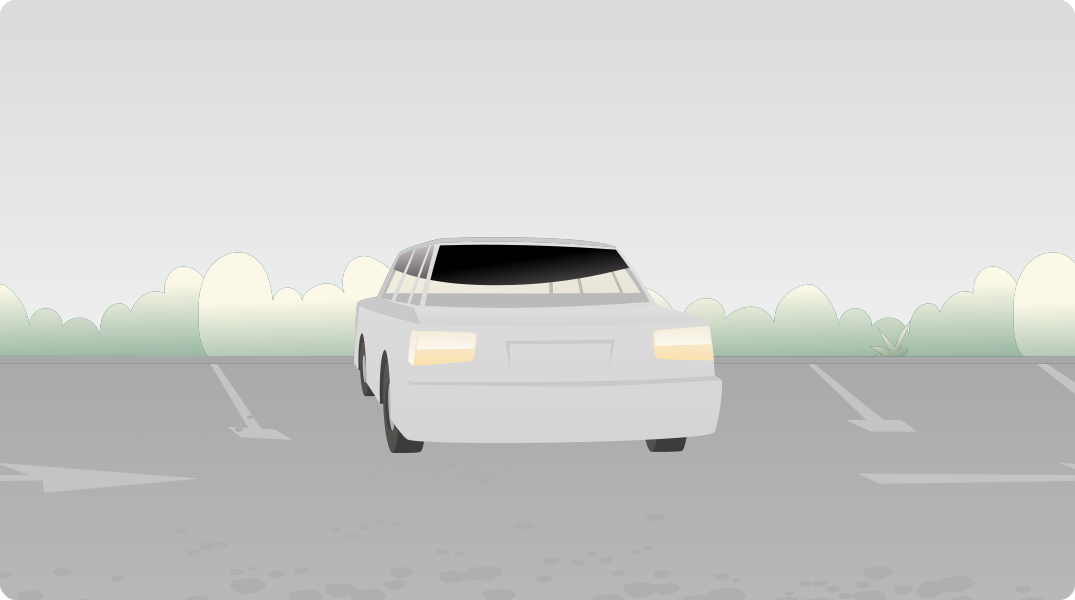
Full powertrain matrix (B15, 2005)
Every engine × drivetrain combination currently available in the German market
Loading variants…
Generation lineage
Each generation at a glance, oldest to newest